
RACK COOLING DISTRIBUTION
Configure the Flow Path From the CDU to the Rack
Rack-side liquid-cooling distribution depends on more than connecting supply and return lines. Flow, pressure drop, branch layout, connection interfaces, hose routing, materials, and serviceability should be configured around the application.
WHY RACK COOLING DISTRIBUTION
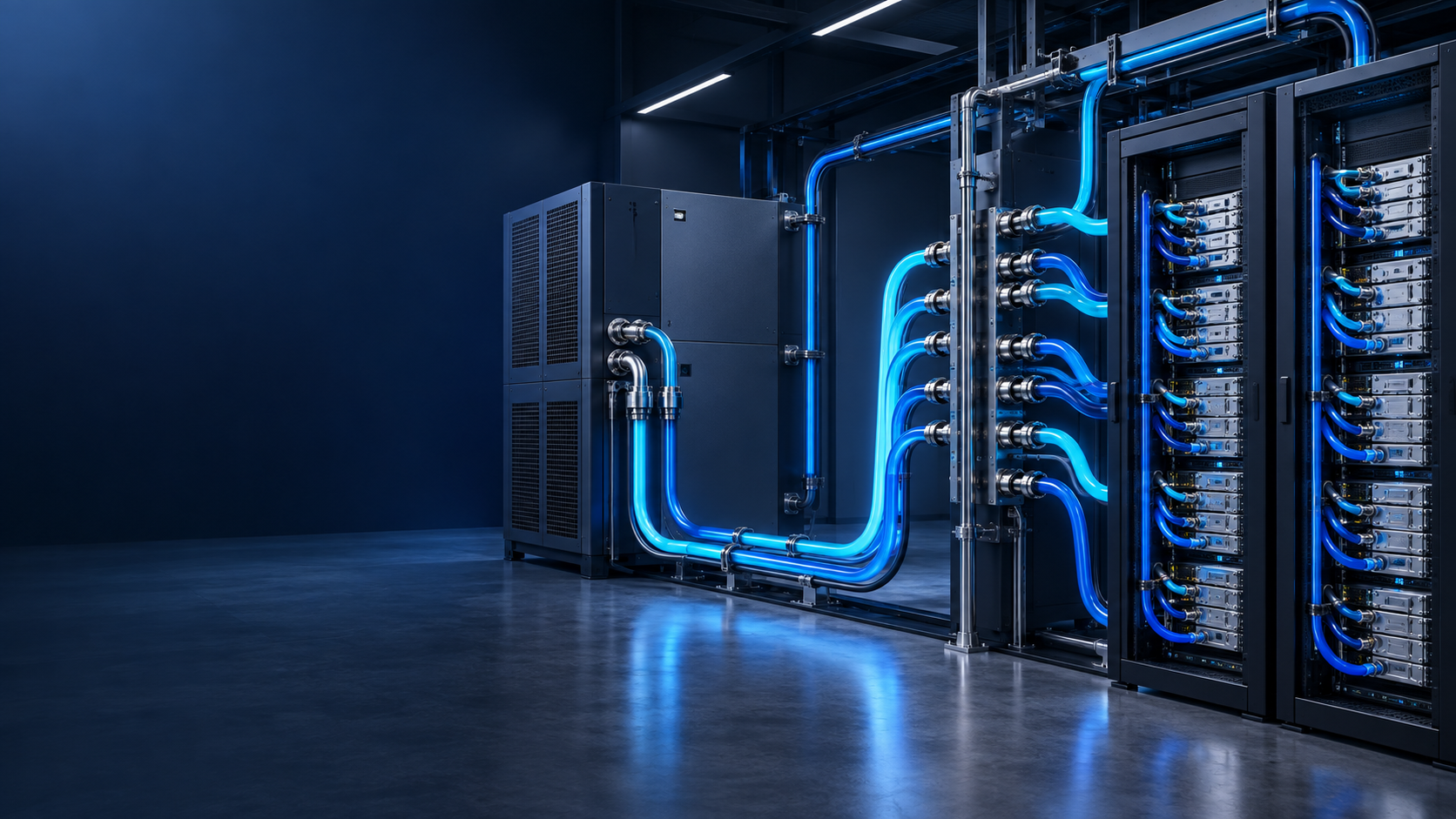
The flow path has to fit the rack, the CDU, and the operating requirement.
Coolant distribution is a mechanical and hydraulic problem as much as a cooling problem. Flow-path geometry, pressure drop, rack density, branch count, interface choices, routing, installation constraints, and service access all shape whether a distribution architecture will work in the intended environment.
A useful distribution strategy is configured around those constraints — not assumed from a generic parts list.
DISTRIBUTION ARCHITECTURE
Build the flow path around the application.
InfraSoma organizes rack cooling distribution around functional mechanical layers. Specific technologies and configurations are selected from the application requirement — not from a fixed catalog stack.
ARCHITECTURE DIRECTION
Manifolds
Define supply/return distribution geometry, branch layout, port strategy, materials, and serviceability around the application.
ARCHITECTURE DIRECTION
Hose Assemblies
Select flexible connection paths around coolant compatibility, routing, bend requirements, pressure conditions, and service access.
ARCHITECTURE DIRECTION
Connection Interfaces
Configure rack/CDU connection interfaces around serviceability, compatibility, disconnect strategy, and application requirements.
ARCHITECTURE DIRECTION
Valves & Flow Routing
Define isolation and routing functions around branch architecture, maintenance needs, and hydraulic requirements.
ARCHITECTURE DIRECTION
Rack / CDU Interfaces
Coordinate mechanical transitions between CDU-side distribution, rack-side infrastructure, and the selected connection architecture.
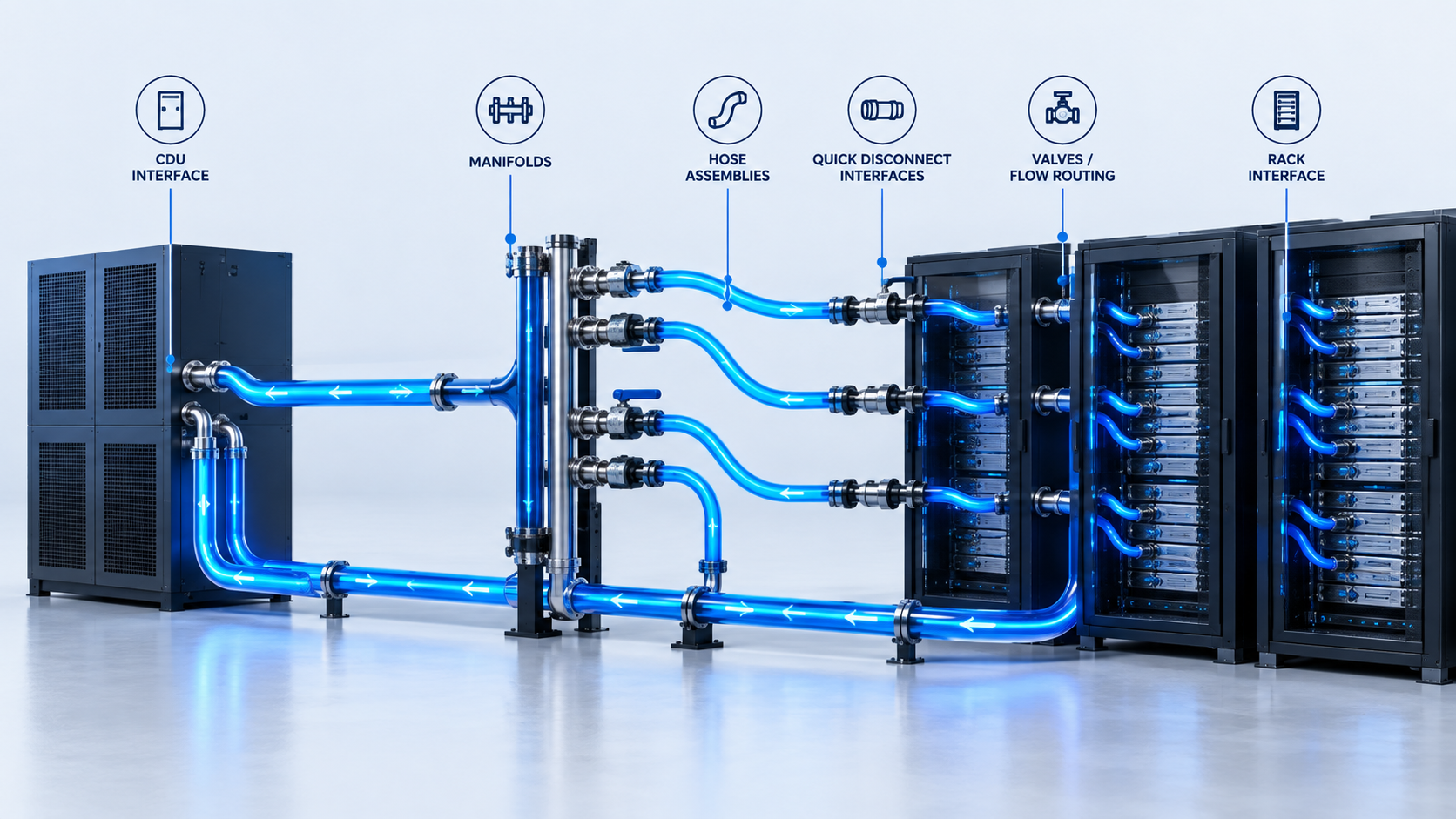
Illustrative rack cooling distribution architecture — final configuration depends on application requirements.
ARCHITECTURE DIRECTION
A configurable flow path, not a fixed product stack.
InfraSoma's Rack Cooling Distribution direction is application-driven. Manifolds, hose assemblies, connection interfaces, flow-routing components, and rack/CDU interfaces are selected according to hydraulic, mechanical, installation, and service requirements.
Standardized assemblies should follow evidence, qualification, and customer pull — not premature product claims.
APPLICATION-DRIVEN CONFIGURATION
Start with the hydraulic and mechanical requirement.
FROM REQUIREMENT TO CONFIGURATION
Translate the application into a practical flow-path architecture.
DEFINE
Understand the rack/CDU requirement.
CONFIGURE
Select the flow-path architecture and mechanical interfaces.
QUALIFY
Evaluate components and combinations against the intended application.
STANDARDIZE
Develop repeatable assemblies only where evidence and customer pull justify it.
SYSTEM ARCHITECTURE
Distribution is one layer of the cooling environment.
Fluid Intelligence
Understand coolant condition.
Fluid Protection
Protect the fluid and cooling environment.
Rack Cooling Distribution
Move and distribute coolant through rack/CDU-side architecture.
Integration
Connect technologies where the application and evidence justify it.
ENGAGE INFRASOMA
Start with the distribution requirement.
Rack Manifold / Distribution Requirement
Define branches, interfaces, flow path, geometry, and service needs.
Hose / Connection Requirement
Define coolant, routing, connection, disconnect, and maintenance constraints.
Rack / CDU Integration Requirement
Define the mechanical interface between cooling distribution and the target rack/CDU environment.
How should coolant move through your rack-side architecture?
Start with the rack, CDU, flow requirement, connection strategy, or mechanical constraint. InfraSoma can help define the appropriate distribution architecture and technology path.