
FLUID PROTECTION
Protect Cooling-Loop Integrity With Application-Driven Fluid Protection
Liquid-cooling reliability depends on more than moving fluid. Filtration, contamination control, and leak protection should be selected around the coolant, equipment, operating conditions, and maintenance requirements of the application.
WHY FLUID PROTECTION
Protection requirements change with the application.
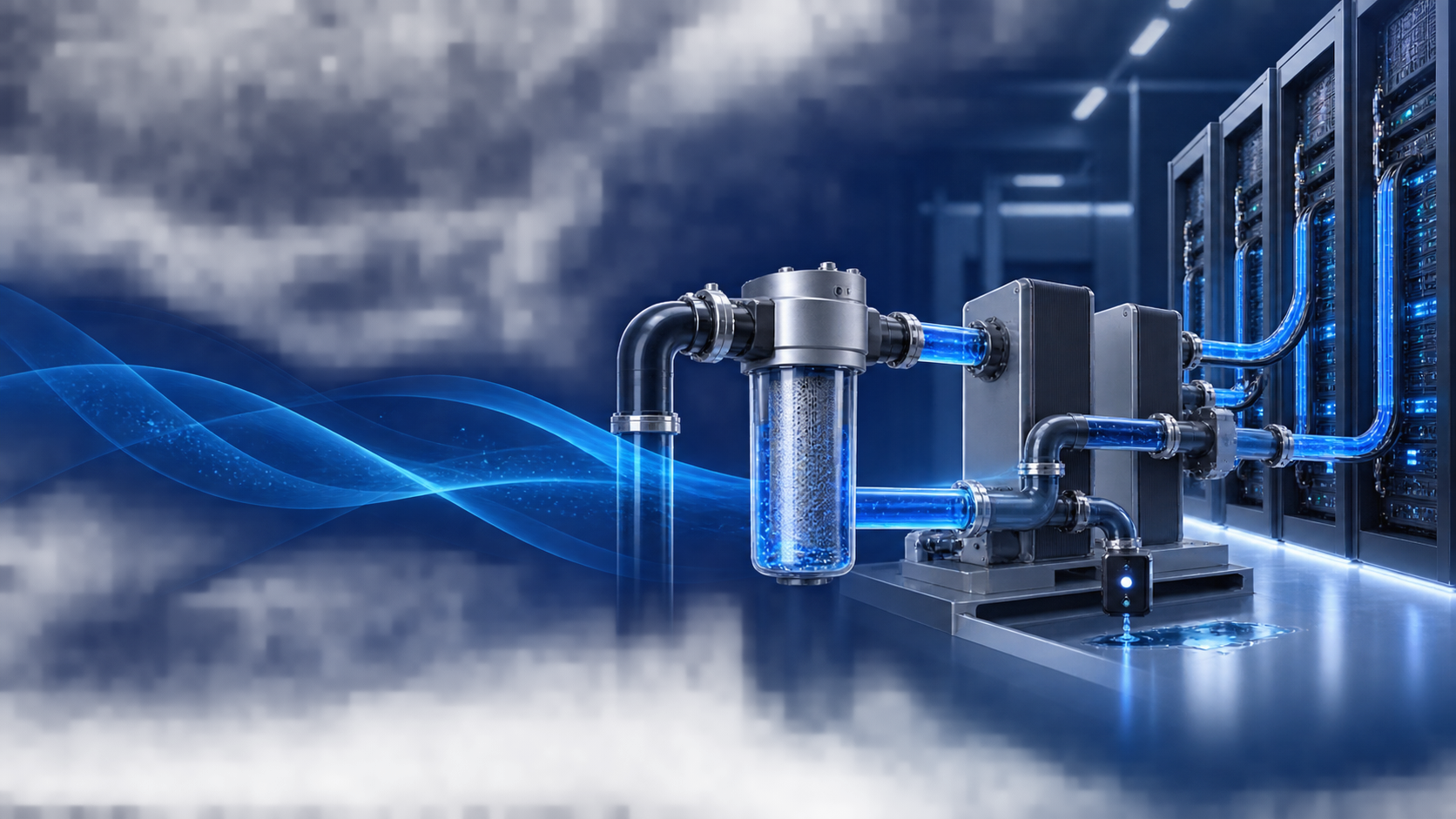
Cooling-loop reliability depends on controlled fluid and environmental conditions — not flow alone. Contamination can enter or develop within a system, filtration requirements vary by architecture, and leak risk varies by location and equipment sensitivity.
A useful protection strategy fits the coolant, flow and pressure conditions, equipment, and maintenance approach of the application.
PROTECTION ARCHITECTURE
Build protection around the conditions that matter to the cooling loop.
InfraSoma organizes Fluid Protection around functional layers. Specific technologies and configurations are selected from the application requirement — not from a fixed catalog stack.
ARCHITECTURE DIRECTION
Filtration
Help control particulate and debris through filtration selected around fluid compatibility, flow conditions, pressure-drop tolerance, and serviceability.
ARCHITECTURE DIRECTION
Contamination Control
Address fluid cleanliness and contamination pathways through application-specific protection and maintenance strategies.
ARCHITECTURE DIRECTION
Leak Detection & Protection
Define detection, containment, and protection approaches around where leaks may occur and what equipment or operations require protection.
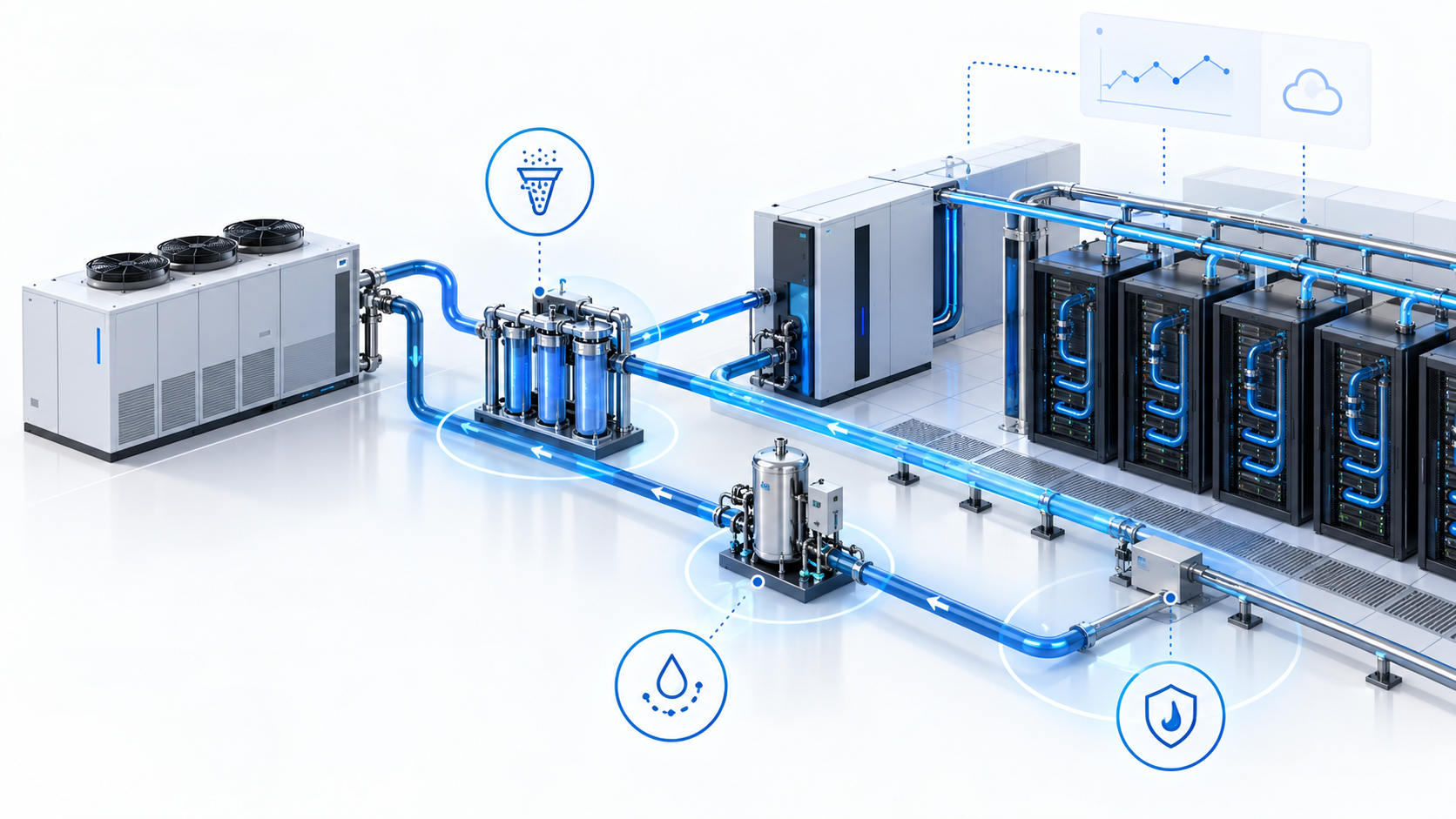
Illustrative protection architecture — final technology and configuration depend on application requirements.
ARCHITECTURE DIRECTION
A protection architecture, not a fixed product stack.
InfraSoma's Fluid Protection direction is application-driven. Filtration, contamination-control, and leak-protection technologies are selected according to the cooling environment and customer requirement.
Standardized combinations or subsystems should follow evidence, validation, and customer pull — not premature product claims.
APPLICATION-DRIVEN SELECTION
Start with the operating requirement before selecting the hardware.
FROM INTELLIGENCE TO PROTECTION
Understand the condition. Protect where the evidence justifies it.
Fluid Intelligence can provide operating context and coolant-condition information. Fluid Protection uses the application requirement and available evidence to help define appropriate filtration, contamination-control, and leak-protection strategies.
Monitoring may inform decisions. It does not imply automatic response, predictive control, or autonomous protection.
SYSTEM ARCHITECTURE
Protection is one layer of the broader cooling environment.
Fluid Intelligence
Understand coolant condition.
Fluid Protection
Protect the fluid and environment.
Rack Cooling Distribution
Move and distribute coolant through the rack-side architecture.
Integration
Connect technologies where the application and evidence justify it.
ENGAGE INFRASOMA
Start with the protection requirement.
Filtration Requirement
Define fluid, contamination, flow, and pressure-drop constraints.
Contamination-Control Requirement
Understand cleanliness, maintenance, and protection objectives.
Leak-Protection Requirement
Define location, detection, and equipment-protection needs.
What does your cooling loop need to protect against?
Start with the coolant, operating environment, contamination concern, or leak-protection requirement. InfraSoma can help define the appropriate protection architecture and technology path.